Showing posts with label pregnancy. Show all posts

Saturday, February 19, 2022

Pre-Pre Natal Care for Women and Men - Get Ready For Your Baby!


Did you know that childbirth is supposed to be an orgasm? No pain. Only ecstasy. 

This body that we nurture every day nurtures us back. We are stuck in it. And sometimes, it’s scary. But it doesn’t have to be.


I’ve written about health many times and it all boils down to something we all learned in school. Again, I’m saying it - it seems to me there are only two kinds of people in the world, those who paid attention in school and those who didn’t. Maybe you had a loser for a teacher and you coasted but you missed out on a lot that could be useful to you now. That loser had a lot to teach you.


In all of the pandemic, I only heard the WGBH Boston journalist, Adam Reilly* say what we all learned or should have learned in school (I’m paraphrasing) - “All you really need to do to strengthen your immune system and be healthy is to eat real nutritious food, get enough sleep and exercise.” 


That’s three things.


And, nobody does it.


I was lucky. I was brought up Italian, eating only whole foods from the Italian market in Haymarket Square, Boston. My grandfather and my uncle used to go every week and come home with wheels of cheese and hunks of prosciutto that the family shared. Every day was a fresh loaf of bread. Fresh fruits were abundant. My mother even foraged for dandelion greens. My grandmother grew her own arugula, tomatoes and red pepper in a tiny backyard garden in East Boston. 


My mother cautioned us to never eat anything from a factory! Candy was kept on a top shelf. Anything packaged was suspect.


I was thirty-one years old and eight years macrobiotic when my daughter was born. She popped out after only four hours of labor; she was pissing, pooping and screaming! I won’t say it was painless, it wasn’t. I did it without drugs and there comes a point, where, like Catholic saints, you pass the pain and drift into nothingness. 


Ecstasy.


But it’s not about pain or no pain. It’s about health.


A friend of mine delivered her ninth child herself behind the counter of her natural food store. Health.


Every time I see a commercial for children in a cancer ward, I shudder, because NO CHILD SHOULD HAVE CANCER! No, nor any other degenerative disease.


It is my opinion, and you can take it or leave it, that eating junk food as food causes cancer. “White bucket” fast food restaurants, where the ingredients come out of white plastic buckets instead of out of the garden or from the farm. Anything made in a factory - artificial “food-like substances” (Michael Pollan*, author, nutritionist and chef) that we eat as our daily food.


Feed yourself and your children real nutritious food! Everyone must learn how to cook! Every man, woman and, yes, every child as soon as they are able! 


Cooking is not an inconvenience. It is an opportunity. A chance to get better, to be better, to feel better!


NYC Mayor Eric Adams healed his diabetes and the blindness in his left eye 
by changing his diet 


What is good nutritious food? Here is the Food Pyramid we learned in school. It changes sometimes, but the basics remain the same. In macrobiotics, we lean more toward whole grains and vegetables with occasional servings of chicken, fish, dairy and eggs.
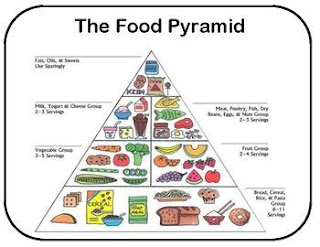


Here’s what to do for good pre-prenatal care and it’s the same for everyone’s everyday health. You don't have to be macrobiotic to be healthy! Get as close to this as you can!


Pre Pre Natal Care For Women and Men: Get Ready For Your Baby!

  1. Learn to cook real whole foods. When you are a young adult (think high school!) stop all junk food as food. Junk food is a cheat meal, only for fun, not for food. Children cannot develop properly on a diet of sugary breakfast cereal, pizza and hot dogs. Not in life or in the womb - you must pre prepare for pregnancy to give your baby the best chance at health! 
  2. No drugs, limit alcohol. 
  3. Cut your sugar intake in half - or more!
  4. Get enough sleep. This can be hard when you work and commute. But you must try.
  5. Exercise. Keep your body as strong as possible. Keep your blood circulation pumping! Your own good quality blood made from good quality food is the best healing medicine for you!
  6. Drink plenty of water! Water is the only drink that can truly hydrate you! Dehydration can sneak up on you.  It has many, many symptoms that can be dangerous!


Drugs, alcohol and sugar take from the body. Obviously, no hard drugs which can take your life as well as your baby’s life. Use other medications in moderation at all times. (Check with your doctor.) Nowadays women do not drink alcohol when pregnant. Many women also stop coffee. My mother never heard of these restrictions. I did drink coffee and everything was fine. I was advised by my European macro friends that European women drank good quality beer while pregnant to ensure plenty of breast milk. So, I drank the best beer I could find at the time, Pilsner Urquell. I had lots and lots of milk! I was also advised to eat a fermented soy product called natto for skin health. “No stretch marks,” commented the intern who cared for me. The doctor wouldn’t come down to the delivery. He said since it was my first, there was plenty of time. An intern and several nurses attended me. Initially, I had planned to use a mid-wife with doctor/hospital back-up. However, the doctor felt my hematocrit (number of red blood cells) was too low for mid-wife conditions. I studied what that meant and adjusted my diet to change my condition - I reduced my coffee intake and I made a hearty miso soup for my lunch everyday, bringing my hematocrit up to an acceptable level. The doctor couldn’t believe I had done it.


Be advised - 


Pre-Prenatal care also applies to boys and men! When they eat, young men are preparing the quality of their sperm which contains the program of their good or bad health. When they eat, they are creating the quality of their health which they are passing to their child! How many young men do I see leaving the convenience store at lunch time with a huge bag of chips and a huge bottle of Coke! Not a nutritious lunch for a working man! We could go into the eating habits of our mothers and fathers which also influence the quality of our health. Again, I was lucky. My parents’ generation did not have a lot of junk food around and most of it was too expensive for them to buy. That’s no longer true.


We are further and further away from that naturally healthy generation. Possibly four generations removed. In many cases, we could go back to great-great-grandmothers before we reach someone who cooked real nutritious food every day. And THAT effects our health, our children’s health and our future children’s health! The good news is, the body reacts quickly and powerfully to good food and good habits; we can reverse most damage that has been done.


This body that we were given. This body that we nurture will nurture us back.


If we don’t take good care of our body, it will seem to attack us one day when we least expect it.


But, it’s not an attack, it’s our body reacting to what we gave it.


Give your body goodness. Get ready for your baby!


©Patricia Goodwin, 2022


  • I am not affiliated with journalist Adam Reilly, nutritionist Michael Pollan, or Mayor Eric Adams, and they have not endorsed me in any way. 
  • I am not a doctor, nor a medical professional. I’m just a person who has enjoyed the benefits of a macrobiotic diet and lifestyle for nearly 50 years. I’m 70 years old and not on any medications. When something goes wrong, I am able to consider what caused it, make adjustments and watch things heal. However, by law, I am required to say that any advice you see in my blog is not meant to be followed without first checking with your doctor.

Patricia Goodwin is the author of When Two Women Die, about Marblehead legends and true crime and its sequel, Dreamwater, about the Salem witch trials and the vicious 11-year-old pirate Ned Low. Holy Days is her third novel, about the sexual, psychological seduction of Gloria Wisher and her subsequent transformation. Her latest novel is Low Flying, about two women suffering psychologically abusive marriages who find and nurture each other. Her newest poetry books are Telling Time By Apples, And Other Poems About Life On The Remnants of Olde Humphrey Farme, illustrated by the author, and Java Love: Poems of a Coffeehouse.


Within this blog, Patricia writes often about non-fiction subjects that inspire or disturb her, hopefully informing and inspiring people to be happy, healthy and free.


***Disclaimer: The information on this blog is not meant to substitute for medical care. Please consult your physician before beginning any new dietary guidelines. 

Monday, January 2, 2017

Diary of a Chambermaid and White Girl – Am I Watching the Same Movie?


(spoiler alert)

I finished watching White Girl on Netflix late one night and immediately started Diary of a Chambermaid (2016 version with Lea Seydoux). The two films are set centuries apart, however, within the first few seconds of Diary, I’m wondering if I’m still watching White Girl. I can’t be. White Girl is a present day film about Leah, a careless, privileged 19-year-old blonde girl cavorting with drug dealers in the low rent district for a summer, while Diary of a Chambermaid is about Célestine, a young woman, not much older than Leah, who is making her living in service to one wealthy family after another in the early 1900s.


I’ve read many of the reviews of White Girl, most of which focused on race. But, I should like to focus on what I see and what I have experienced, which is sex and class. Obviously, when comparing the two films, White Girl and Diary of a Chambermaid (in which everyone is white), that makes sense.

Both movies open with the protagonists moving into new digs. Leah, into a cheap apartment in Queens. Célestine, to a new position as a chambermaid outside Paris. As they disembark, both young women are being observed by men. I was struck within the first few moments of Diary of a Chambermaid, while still thinking of White Girl, to realize how much both women were still ruled by the sexuality of men. Célestine is being sized-up by the servant, Joseph, who goes to pick her up at the train station. After she struggles with her trunk, Joseph lifts it easily to his shoulder, marking his dominance. In White Girl, we see that Leah and her girl friend, Katie, bending over in butt-skimming shorts, are causing quite a stir amongst the men on the stoop by their moving van, though none of them get up or try to help the girls move. At Leah’s job, which is really an unpaid internship at a hip magazine, her boss, Kelly offers her cocaine and then proceeds to get under her skirt. Leah deftly swivels to avoid being fucked and gets busy doing him on her knees. Another employee walks in on them, a woman, and we can’t help feel by the tension in the air, she may be Kelly’s wife or girl friend. This new character knows something was going on, though Leah and Kelly swiftly get their clothes back on. By the look on her face we know that sex in the workplace is still questionable, even in hip places. Leah is the kind of girl - privileged, even for whites - who gets the internship, but, really, should we envy her? Is sex a part of work now? It certainly is for Célestine, who usually manages to avoid having sex, perhaps at great peril to her job or perhaps to keep her job – it could go either way for Célestine. And, perhaps, for Leah, if Kelly’s significant other put up a stink. Célestine maneuvers the sexual battlefield almost every day. Leah has the freedom to have as much sex as she wants, and she seems to want plenty. Leah is sexually free but we still wonder when her boss grabs her if she really wants to go down on him or if she’s afraid not to, afraid of losing her internship at his cool zine. However, Leah has a pretty puffy cushion in her parents. Not to mention the safety nets of antibiotics and abortion. For Célestine, having sex is more of a tightrope. She must manage her employer’s advances or risk a loss of power, a power she maintains by the thin thread of keeping him at arm’s length, or worse, risk an unwanted pregnancy that would mean certain homelessness and possible death.
 
 Both young women are blonde. Both have open, innocent faces. That’s not an accident. With their innocent blondeness, they shine in their surroundings. So much so that Célestine cannot walk down the street without men turning their heads and a Madame stopping her to offer her a position as a whore in her house. Both young women stand out in their surroundings for other reasons as well as their looks - Célestine is intelligent. She has, as a man once said to me, “a face [considered by men to be] too intelligent for a woman.” It’s clear from the start through snide remarks under her breath that the she has a smart mouth, a disaster in the making for a servant, but for the modern viewer this innate sarcasm means Célestine is no fool, in fact, she is as modern as we are. Leah, in White Girl stands out for her exceptional lightness, both in her hair and skin and in her humor. Leah has never experienced trouble she couldn’t “figure out.” Roger Ebert called her character “envelope thin” as though she were written badly. I laughed out loud. He’d also said, in 1995, that the character of Acid Burn in Hackers was way too cool for reality, even for the cool kids. I laughed out loud then too. “Where’d you go to high school?” I thought. I’ve known so many girls like Leah, I couldn’t count them. Girls who laugh at the idea of NOT going into Central Park at night. Girl who leave their valuables inside unlocked, idling cars and leave their laptops on café tables when they go to the restroom. Girls who have unprotected sex with strangers. In a word, rich girls. Girls - and boys too - who “party hearty.” I’ve watched in awe as kids who grew up in fine homes where I live now, where I escaped to, seek out the rougher parts of the city where I escaped from, go to bars I’d never go into if I was dying, for fear of dying, they go there to drink, get smashed, dance on the tables, have sex in the multi-sex bathroom, get bombed, get wasted, just for kicks, just to escape what they feel is worse than danger – boredom – that is, because they all have what I call a foundation – a place to run to whenever they need a place. Leah has that. Célestine doesn’t, but she skillfully makes use of the places of others.


Leah comes from a good family. When Blue, the young drug dealer she hooks up with sees a photo of Leah with her father, mother and siblings, he says, perplexed, “They look nice,” as if to say, “What are you doing here?” In fact, he asks her, why she’s in the city, but she doesn’t tell him that she’s enrolled in college, about to enter her sophomore year. Right away, I know she’s playing him. Leah is stalling, trying to slow down time, trying to not be responsible for a while. Blue, so named because he’s always serious, doesn’t have the luxury of a time out. Time is always on for him. Leah is lucky to have fallen in with such a nice crowd of drug dealers, young, responsible enough to not do the harder drugs they sell, kind enough to be respectful of the girls. In one scene, one of the young dealers, Kilo, astonished by Katie’s unshaved armpits, gently pets her underarms in awe. However, in another scene, Leah is quite aware of the danger posed by other drug dealers in another part of the city. Whenever it suits her, she maneuvers carefully around them.


In Diary, Célestine, usually mistreated by her masters, is happy only once, and only for a short time, when one of her mistresses is nice to her. To quote Célestine, “Just speak to me kindly…and I’ll be moved.” Just about everyone is nice to Leah. But, are they? The viewer feels a tension about to snap in every relationship Leah has – except for her family back home – everyone seems to want something from her.


In Diary of a Chambermaid, Célestine is propositioned by men almost constantly. Married men, her master, the neighbor, men in the street. However, it is the gardener and driver, Joseph to whom she is most drawn. Joseph tells her about his idea for a café in his hometown of Cherbourg. He has money saved. After coldly skirting Célestine for months, he slowly accepts her, finally embracing her one evening, passionately crying out, “I dream of you, Célestine! I dream of you in that little café!” In fact, Joseph needs her as much as she needs him. He offers her a life partnership. The most equal she will perhaps ever know. So desperate is she by this point in the story, that Célestine allows him to pull her into another world – that of anti-Semitism. She has no hatred for Jews, she says to him. But, she will hate Jews if it means having a place to live and thrive. The final words of the film are, “I would follow him anywhere, even to crime.” Joseph has already involved her in the theft of their Jewish master and mistress’s silver. He patiently, brilliantly plans and executes the theft and her/his subsequent retirement from service. In the last scene, he arrives dressed in a proper suit and tie, traveling in a real coach to pick-up Célestine. 

In White Girl, Blue dreams of marrying Leah. You can see he needs her a lot more than she needs him. It was when Blue takes Leah home to meet his grandmother that I realized, this man is in love with her and she is just fooling around. Damn. Even though Leah struggles to help Blue when he gets arrested, she is still not really present with what is happening to him. She is still fooling around, killing time, playing with people. Getting Blue out of prison is something to do till school starts. But for Blue, it’s serious, it’s something he’s never experienced before – someone who cares (he thinks), someone who put herself on the line for him (he thinks). Blue trusts Leah to bring the drugs he was supposed to sell back to a dangerous drug dealer. Instead, Leah gets wasted, dances on the bar, passes out and gets robbed of all the money she’s made selling the package she was supposed to return. (I suspect her boss and his wife who left her passed out on the floor of the club bathroom. I doubt they left the $24,000 money bag with her.) When Blue proposes to her, Leah laughs, “You can’t be serious! We’re so young!” “I’m always serious,” Blue responds. The couple enjoys only a few moments of happiness when they are viciously attacked on the street in broad daylight by the drug dealer to whom they owe money. Blue, out of prison only a few hours, kills the man in self-defense, in front of witnesses. Sirens wail. He’s covered in the dealer’s blood when he pleads with Leah, “You returned it,


didn’t you?” Leah comes up empty. The last we see of Blue, he is in the back of a police cruiser, glaring at Leah. Next shot, the scene is all light and Leah is at her desk in school, looking lost.


Sure, Leah escaped unscathed this time. Blue, because of his race and his record, didn’t. But, I can’t help feeling that Leah’s luck - and her foundation - could run out one day. Her risky behavior could catch up with her, or she could slide through the rest of her life, marry well, never have to work and never have to learn a thing.

Leah is white. The title, White Girl, also refers to a brand of cocaine. I couldn’t help feeling it was her beauty and not her race that both made her both powerful and vulnerable. Leah is white. However, in another story, Leah could be black, she could be from Queens – think about it – I often have – what happens to the prettiest girl in the ghetto – any ghetto? Does she get out? Does she want to get out? Is she slated to be claimed by the most powerful man in the ghetto? What happens to the prettiest girl in the office? in the Capitol building? We have it by experience, by the news, by gossip, that interns are meant to be fucked. And by literature, that servants are made to serve their masters’ needs, every need. And when these servant girls get pregnant? There is a moving scene in Diary when Célestine and the cook are talking together at the kitchen table late into the night. The cook, Marianne, who has the look of an exhausted woman who once was pretty and vivacious but now cannot lift her head, tells her story. She began as a pretty chambermaid, fell for a man, got pregnant, got thrown out into the streets, the usual, respectable reaction to servant pregnancy. The quiet, intimate conversation between the two women concludes with a veiled admission of what happened to the baby. A very old form of abortion.

White Girl and Diary of a Chambermaid are not the same movie. Times have changed a bit. Or have they? Judging from the news, women are still caught between a dick and a hard place. Even our President-elect has been accused of raping a 13-year-old. Women are still coming forward to name him in incidents of sexual harassment or rape. How can this situation be happening? How can he be in the White House while under investigation? The answer is that this is still very much a man’s world. Past Presidents have had illicit sex while in office. Prominent men are frequently in the news for sexual harassment or sexual embarrassment. We’re not surprised. Women are sexualized in the media or called “nasty” when they are not sexual. It seems like Leah had more choices than Célestine, but I wonder. Leah also seems caught in a sexual web. She is raped while unconscious by the sleazy lawyer she hires to represent Blue. Sex becomes payment for his services. Though she has the means to deal with most situations, Leah risks disease from unprotected sex as much as Célestine. Right now, women can get an abortion. But, what about a year from now? Think about this – there may have been a time when women had more control over their destinies. The ancient Romans used – and used up – Siliphium, an herb that prevented pregnancy. This herb was so popular, it went extinct.

Plus ça change.

©Patricia Goodwin, 2017

Patricia Goodwin is the author of When Two Women Die, about Marblehead legends and true crime and its sequel, Dreamwater, about the Salem witch trials and the vicious 11-year-old pirate Ned Low. Holy Days is her third novel, about the sexual, psychological seduction of Gloria Wisher and her subsequent transformation. Her newest poetry books are Telling Time By Apples, And Other Poems About Life On The Remnants of Olde Humphrey Farme, illustrated by the author, and Java Love: Poems of a Coffeehouse.