Showing posts with label garden. Show all posts

Wednesday, March 30, 2022

I Cook Because I Eat: Why Can’t Heroines Cook?


 Olivia Benson of Law & Order SVU prepares 

Salade Nicoise for herself and her son. He won't like the olives.  


I don’t understand why liberated heroines can’t cook. We need to eat, therefore, we need to cook. Eating fast food is not the answer. The more time you and your family spend in the kitchen cooking real food, the less time you and your family will spend at the doctor’s office and the hospital.

I'm a 50 year macro, wife and mother who cooks from scratch at least three times a day and has over 80 articles and 7 books to her name, plus I ran my own PR business for 10 years. (I started late in life.) I make it work. Why can't strong women heroines face up to the challenge of feeding themselves and their families?

I’m tired of that old feminist chestnut of “Oh! I can’t cook!” I get it, Simone de Beauvoir! It can be perceived as “endless drudgery and domestic slavery.” Wake up! Every person who told me that they couldn’t cook is - guess what? Dead! One woman, a minister, told me she wouldn’t even butter bread because it was too much like cooking. What do you think happened to her? She dropped dead in her driveway on her way to teach an aerobics class to heart patients.


Wake up! Every person who told me that they "couldn’t cook" is - guess what? Dead! 


Often, I’ll be watching - or trying to watch - a TV show about a female detective when suddenly her kid asks for breakfast or dinner and there’s no food in the house. “What?” she calls from gruesome files of dead victims, “What?” “There’s no food!” the child repeats. “I’ll go shopping after work.” Somehow, we know that’s not going to happen. I lose interest in the show.

Another one asks her son if his girlfriend’s fake breasts can make coffee. I’m thinking, are you seriously telling me you can’t make a cup of coffee for yourself - by yourself? You can solve crimes but you can’t boil water? Again, not going to watch it.

I tried to find one. I Googled TV detectives that cook. Lots of TV detectives. None cooking. I did get The Gourmet Detective. My heart skipped a beat. But, no, she’s the detective, he’s the professional gourmet come to lend a hand in the investigation.

Eliminating those fictional heroines who actually are chefs like Jane Adler (played by Meryl Streep) in It’s Complicated and Kate (played by Catherine Zeta-Jones) in No Reservations, I found two who cook - one, Erica Barry, playwright, (played by Diane Keaton) in, aptly named, Something’s Gotta Give. She’s not intimidated by the kitchen. She can whip up breakfast, dinner, snacks, picnics at will or romantic midnight scrambled eggs for two when the electricity goes out. The other is Olivia Benson (played by Mariska Hartigay) of Law & Order Special Victims Unit. Olivia does not consider herself to be a very proficient cook, but she takes time out of her busy crime-solving, victim-soothing job, to bravely go where most TV detectives don’t dare to go, into the kitchen to make dinner when she and her son, Noah are hungry! Wow, what a concept!

I have found a few in real life.

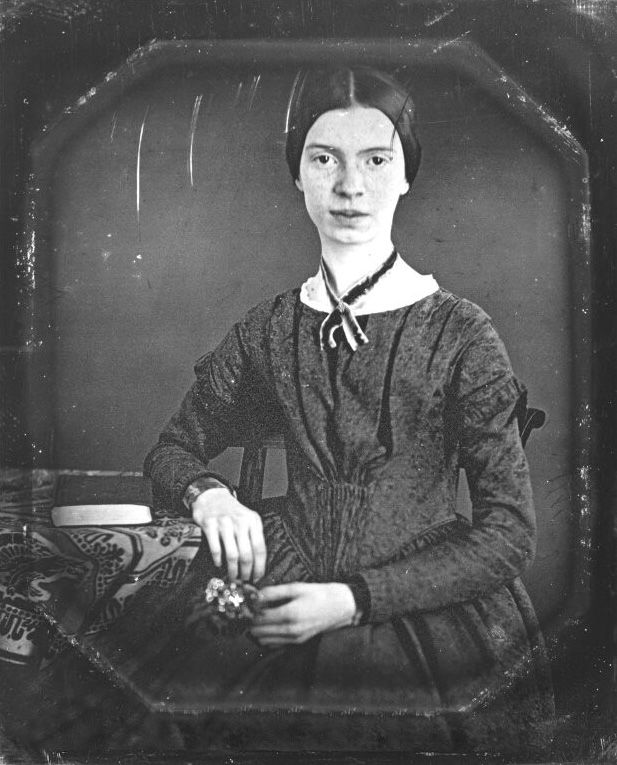
Thinking back over literary history, I realized Emily Dickinson was the family baker. Her father insisted on only eating her bread because he liked it better than any other. Emily loved baking. She made cakes, cookies, candies and puddings. She often made treats for the local children, and because she was so reclusive, she would lower a basket full of cakes from her window to the children. Emily became quite famous in town for her baked goods. It was only after she died that her sister, Lavinia, found almost 2,000 poems that Emily had written, some of them started on the backs of recipes or random kitchen wrapping papers. Emily once said, “People must have puddings” and “Love’s oven is warm.”


Emily Dickinson

“I am going to learn to make bread to-morrow. So you may imagine me with my sleeves rolled up, mixing flour, milk, salaratus, etc., with a great deal of grace. I advise you if you don’t know how to make the staff of life to learn with dispatch.” 

                                                                    – Emily Dickinson to Abiah Root, September 25, 1845 (L8)


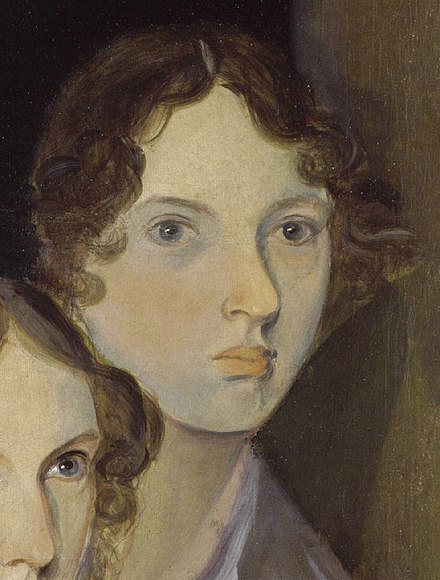
Emily Brontë
writer, poet, baker

Also, the Brontës - Charlotte was challenged by the kitchen, but Emily was something of a kitchen goddess, it seems. The village prized her bread over that of any other baker. She also cooked mutton as a common staple, turnips, potatoes and apple pudding. Oh, and she gave us the incomparable Wuthering Heights among other works, including lots of poetry. 


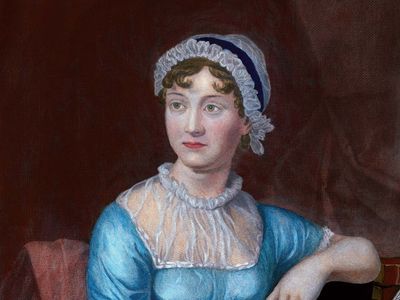
Jane Austen knew food.

Jane Austen’s household was humble and crowded with sisters, cousins, nephews, neighbors and friends. Many hands pitched in and Jane displays an intimate knowledge of many dishes in her work, often ascribing certain dishes to certain characters to make a point: “a pyramid of fruit which confronted Elizabeth Bennet at Pemberley…Or of the cold beef eaten by Willoughby on his journey of repentance to see Marianne.” (Maggie Lane

Okay, so I found some heroines that cooked and somehow managed at the same time to be superhuman in their work. If artists in real life can feed themselves and their families, why can’t fictional ones?

We all need to cook! Our health and the health of our families and our future as human beings depends on our ability to feed ourselves and keep ourselves well.

Even if you hate to cook, you still need to find a way to make meals successfully. I find that planning meals around brown rice really works for me - brown rice and broiled salmon with broccoli; brown rice and pinto beans with guacamole, tortillas and salad; brown rice and broiled chicken with potatoes and green beans, you get the idea. It’s quick, simple, tasty and nutritious.

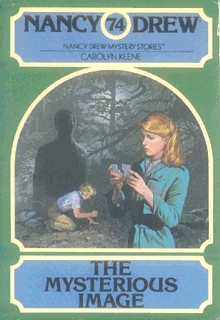
Give me heroines who can feed themselves and their families good quality food! Do we have to go all the way back to Nancy Drew? She not only stopped the investigation for meals - she did the dishes too! And, might I add, still got her perp!


P.S. Laura of Garden Answer is a busy, professional gardener, mother and wife who stops work to cook meals for herself and her family; she tries to make a new recipe every week. 


Laura and her son making chicken curry with ingredients from her garden.


Here’s a list of busy professionals who love to cook - stars who cook!

 Also Gwyneth Paltrow and Emily Blunt (stars love her roasted potatoes!)

©Patricia Goodwin, 2022


Patricia Goodwin is the author of When Two Women Die, about Marblehead legends and true crime and its sequel, Dreamwater, about the Salem witch trials and the vicious 11-year-old pirate Ned Low. Holy Days is her third novel, about the sexual, psychological seduction of Gloria Wisher and her subsequent transformation. Her latest novel is Low Flying, about two women suffering psychologically abusive marriages who find and nurture each other. Her newest poetry books are Telling Time By Apples, And Other Poems About Life On The Remnants of Olde Humphrey Farme, illustrated by the author, and Java Love: Poems of a Coffeehouse.


Within this blog, Patricia writes often about non-fiction subjects that inspire or disturb her, hopefully informing and inspiring people to be happy, healthy and free.


***Disclaimer: The information on this blog is not meant to substitute for medical care. Please consult your physician before beginning any new dietary guidelines. 


Tuesday, May 4, 2021

What Is It Like to be Born Into Goodness?


                                            Laura and her mother, Susan


It reminds me of a quote I saw online - “Found on a computer file search: Happiness does not exist. Do you wish to create it?”


I was not born into goodness. I had to create it. (It’s all in my novel, Holy Days.)


I'll tell you what it is like to be born into goodness - you can grow roses!


Lately, I’ve been watching a lot of wonderful home shows hosted by wonderful people who are so good and gracious it's hard to believe they really exist, but trust me when I say no one is that good an actor - you cannot fake what you don’t know.


I’ve been watching Ben and Erin in Home Town. They’re wonderful. Jenny and Dave in Fixer to Fabulous. Equally wonderful. (Jenny and Dave have adopted a child from the Congo, so not everyone in the family was born into goodness, but she’s living there now!)


Mostly, I’ve been watching Garden Answer. Every day I watch the beautiful, blue-eyed, auburn-haired Laura Le Boutillier enthusiastically dig holes. I watch her plant beautiful plants. But, what I really love is hearing her voice. I have to hear the very beginning of every video when she calls out, “Hey, guys! How’re ya doin’?” She talks to me.


She’s my best friend and my husband, though he likes her very much, is tired of hearing about her. In spite of himself though, he gets drawn in. Together, he and I laugh at the antics of Laura’s ginger cat, Russell. Russell suddenly appears behind Laura as she explains about compost, he approaches the porch, he abruptly leaps on to the porch railing, gently balances on the arm of Laura’s chair, settles delicately into her lap, peers over the edge of the computer screen. Lol!


It’s all mesmerizing.


A nurse writes in the comments on YouTube that she gets to work a half hour early every day so she can watch Laura before work.


Laura has over 5 million followers on social media. 1.23 million subscribers on YouTube. I don’t even subscribe, but I’m there every day, sometimes more than that, checking on Facebook if she’s posted another  photo of her gorgeous garden. I especially love what Laura calls her Versailles area, a gentile corner of soft sweetness complete with a Grecian statue of the Goddess Hebe. Laura’s husband, Aaron (they work together so well that after 15 years of marriage, they practically finish each other's sentences) is mostly invisible behind the camera, but he does pop up now and then helping to lift the big pots on to the fork lift that Laura just drives away. It’s adorable to see her delicate form driving off atop heavy machinery. And, if all this wasn't enough, she just popped out another baby, a girl, Samantha Grace!


In today’s video, Laura opened boxes. Garden supplies were in the boxes. It was super fun. She loaded up the Gator (a cool electric golf cart/jeep) with huge boxes and drove them over to a shaded area where she had a party opening them on the lawn. Laura’s son, Benjamin has a mini gator. There’s video of Benjamin tooling around in his mini car, careful to avoid tulips and the robo mower, which is almost as cute in a R2D2 kind of way.


My favorite video is the April flower arrangement. Russell is in it a lot and so is her other ginger kitty, Cheddar. 


I sent Laura and her mother, Susan (Susan is model gorgeous and a very funny addition to the videos. Laura and Susan laugh a lot.) copies of my poetry book, Telling Time By Apples and Other Poems About Life on the Remnants of Olde Humphrey Farme. Funny thing about writers, we keep trying to communicate. People send Laura gifts all the time. I wanted to send Laura something. The address listed online is not her home, but her parents’ garden center. Yes, Laura was born to the garden. She’s not a reader, though. She describes herself as a “doer.” But, I think she’ll appreciate the beauty of the book. It is a work of art. And love.


It’s not lost on me that the pandemic has made simple pleasures like home and garden so appealing. My husband loves Laura’s “can-do” spirit. He also loves Ben and Erin; Jenny and Dave, and those two lively twin sisters, Leslie and Lyndsay on Unsellable Houses for the same reason. “They just go ahead and do it!” I love them too.


Maybe Laura will mention me and my poetry book in one of her videos. It will be a moment like the one in Fahrenheit 451 when the television screen speaks to Julie Christie’s character, “Linda! What do you think Linda?” And she gets all befuddled and shy. That would be pretty exciting. But, Laura, you don’t have to mention anything. Maybe drop me an email. 


One other thing Laura has accomplished. My best friend has also fallen in love with Garden Answer. I can’t tell you how great it is to speak with her again about real and beautiful things that we both love. I’ve missed that. Her job and her family has kept her so busy these past 10 years, we’ve lost those precious times we used to spend together.


Thank you, Laura. Thank you for all you do. 


I can’t wait till the next video.


©Patricia Goodwin, 2021


Patricia Goodwin is the author of When Two Women Die, about Marblehead legends and true crime and its sequel, Dreamwater, about the Salem witch trials and the vicious 11-year-old pirate Ned Low. Holy Days is her third novel, about the sexual, psychological seduction of Gloria Wisher and her subsequent transformation. Her latest novel is Low Flying, about two women suffering psychologically abusive marriages who find and nurture each other. Her newest poetry books are Telling Time By Apples, And Other Poems About Life On The Remnants of Olde Humphrey Farme, illustrated by the author, and Java Love: Poems of a Coffeehouse.


Within this blog, Patricia writes often about non-fiction subjects that inspire or disturb her, hopefully informing and inspiring people to be happy, healthy and free.


Tuesday, December 1, 2020

A Tree


A Tree

a tree doesn’t die all at once

it dies every day

every minute 

after the buzz saw leaves

and the chipper

screaming trees

and the air is still

and the sawdust chokes the grass

long branches once soft

now wounds open to the air

a squirrel dashes up to his nest

only to find nothing


as the softness once gave

so does the hard scape take


every day the tree dies


I am dying

tree by tree


Postscript:


Maybe I was wrong to base my cure on beauty. But, after all, everyone does. We are all soothed by beauty - a beautiful day, a beautiful sky, ocean, dog, child, garden, trees. Softness. It's terrible when beauty is taken from us. A friend told me that she used to live next door to a pretty yellow cottage situated in a grove of trees with rabbits running all around. Softness. The homeowner decided one day to cut down all the trees - 18 of them! Then painted the house grey.


I'm so over designer grey.


The tree in the image is still standing, though severely cut back. I posted this pre-trimming photo to illustrate its softness and exquisite beauty. 


The other trees were not so lucky and indeed neither was I. By the time the screeching chipper was done, we were left with telephone poles. (What happens when your neighbors don't care.) The trees are still alive, but their nutrition and health will be compromised - less food, less strength, less softness, less joy.


I tried to tell myself, ok, it's done, they're gone, it's over - but it wasn't over! Every day I died a

little more each time I looked at the open wounds of the missing branches. Hard scape takes. Softness gives.


Again, perhaps in the current scheme of things, a minor blip. But, if you care, then you care and there's no where to go and isn't it now of all times when we need the softness, the giving breath and beauty of trees?


I came from a place where people put down tar so they won't have to work too hard. My own family buried a beautiful sparkling blue refreshing pool because they were too lazy to swim in it! 


I choose beauty. I choose beauty.


©Patricia Goodwin, 2020

(tree photo by ourcirca1650cottage)


Patricia Goodwin is the author of When Two Women Die, about Marblehead legends and true crime and its sequel, Dreamwater, about the Salem witch trials and the vicious 11-year-old pirate Ned Low. Holy Days is her third novel, about the sexual, psychological seduction of Gloria Wisher and her subsequent transformation. Her latest novel is Low Flying, about two women suffering psychologically abusive marriages who find and nurture each other. Her newest poetry books are Telling Time By Apples, And Other Poems About Life On The Remnants of Olde Humphrey Farme, illustrated by the author, and JavaLove: Poems of a Coffeehouse.


Within this blog, Patricia writes often about non-fiction subjects that inspire or disturb her, hopefully informing and inspiring people to be happy, healthy and free. With plenty of beautiful trees.


Thursday, May 10, 2018

The Dumbing-Down of Proust or What Do the French Read?


Marcel Proust


Picture a cozy domestic scene: years ago, my daughter is in high school, in Advanced Literature, she’s doing her homework; I am vacuuming her room. I see a copy of Oscar Wilde’s short stories on her desk. I pick it up, vacuum still going, and open to my favorite line in Salomé, “Suffer me to kiss thy lips!” Salomé whispers this to the captive John the Baptist. Think of it! To be kissed by Salomé, John would suffer! “Suffer” is an old term, used as an equivalent of "may I please," but in this case, the virtuous John would indeed suffer. Exquisite line. Think of it! Wilde paid dearly for each and every word: he lived for them; he went to prison for them; he died for them. He ate, drank and sweated his words. And they are perfect.

I searched the pages, ah! Found the passage! I read: “Let me kiss you!”

What? Desolation! A sinking in the pit of my stomach, but, no matter, I have my own copy of Salomé.

“This is a terrible translation!” I scold my daughter, tossing the book on her desk.

I vacuum a few inches. I stop. That was no translation! Wilde was English! That was a dumbing-down of literature! “Sacre Bleu, Invaders!”

Twenty years before that afternoon, another afternoon: I am entering my English class at college, a course on the writer, Henry James. The day is dark, so dark, in fact, the lights are on inside and you cannot see out the windows. The world appears as dark as night; the campus lights are burning. No one is in the room except my tall and awkward friend, Douglas (When we walk together, he says we are both freaks because he is too tall, way over 6 feet, and I am too short, barely 5). Douglas has a stutter, yet he is the most eloquent person I know.

“Listen to this,” Douglas tells me and I do. He reads from his book. Not James. “A little tap at the window, as though some missile had struck it, followed by a plentiful, falling sound, as light, though, as if a shower of sand were being sprinkled from a window overhead; then the fall spread, took on an order, a rhythm, became liquid, loud, drumming, musical, innumerable, universal. It was the rain.”

This last sentence, he delivered by turning toward me, as if to emphasize it, because it was raining then on that dark day, sheets of it pouring down the black windows. He hadn’t stuttered once.

“It’s P-P-P-Proust,” Douglas told me.

I nodded, silently, in awe. I decided in that perfect moment that I should not read Proust until I was much, much older.

And, I haven’t. Till now. The time has come. I’m 66 years old and I can devote my attention to his words. I’m retired. My child is grown, I have no pets, just a pesky husband who always wants to know what I’m writing – kidding – he doesn’t. He’s just as happy to listen to the news or do nothing at all – it’s an art – he’s retired too.

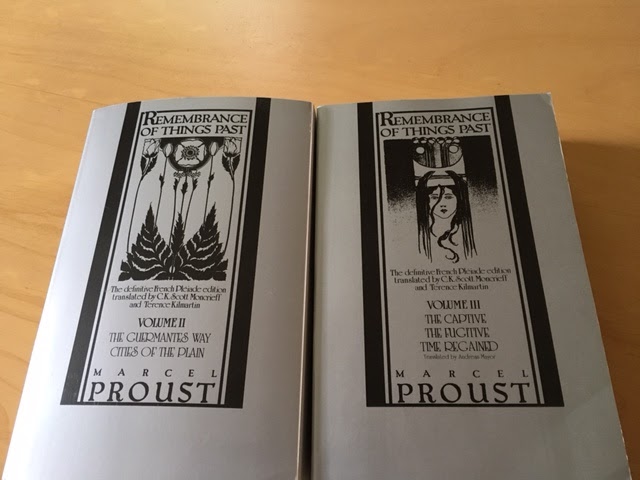
So, I dig out my old copy of Remembrance of Things Past, Volume I, Swann’s Way, Translated by C.K. Scott Moncrieff. I paid $1.95 for this quality paperback at the Cambridge Paperback Booksmith in 1973. (If only I had purchased Vols. II and III as well! If I’d known then what I know now!) Forty-five years later, the book is pretty moldy. There are roach poop stains on some of the pages from the years we lived in a studio walk-up on Charles Street in Boston. (I loved that studio – traditional architecture, fireplace, huge windows looking out on to a wisteria-filled alley - till the roaches took over and the window caved in.) The book is brittle. The pages are dark yellow. The print is tiny. I look online for a replacement only to fall in love with the cover on the new Modern Library edition – an unmade bed – oh, that’s cool! A brand new book! Exciting! Plus, I can see there are 6 more volumes! The last 3 were only recently published. I order the first one just in case I cave. It will be a major project; I’m not sure I can finish all 7 volumes.

The new book arrives and I have it by my bed for a while, I admit. Right on top of A Vindication of the Rights of Woman by Mary Wollstonecraft. Yeah, I’m a nerd.

After I finished the book I was reading – unremarkable, so I won’t say what it was – I announce to my husband and daughter that I’m finally going to read all of Proust! I’m so excited.

I begin with the new edition. Wait, the title is different? It’s not Remembrance of Things Past. It’s In Search of Lost Time. Wow, that’s a big difference. I know Proust is successfully remembering. I have dipped into it a few times, out of complete adoration, and read, if I’m honest, the same 23 pages over and over. He’s not exactly “searching for lost time” - even though he claims to be in the narrative.

I also remember, from my research, that Proust approved this title, which comes from Shakespeare – I'm posting the entire sonnet, which almost seems to reflect the 7 volumes from Swann's Way to Time Regained.

"Remembrance of things past" – Sonnet 30

When to the sessions of sweet silent thought      
I summon up remembrance of things past,
I sigh the lack of many a thing I sought,
And with old woes new wail my dear time’s waste.
Then can I drown an eye, unus’d to flow,
For precious friends hid in death’s dateless night,
And weep afresh love’s long since cancell’d woe,
And moan th’ expense of many a vanish’d sight.
Then can I grieve at grievances foregone,
And heavily from woe to woe tell o’er
The sad account of fore-bemoaned moan,
Which I new pay as if not paid before.
But if the while I think on thee, dear friend,
All losses are restor’d, and sorrows end.


I’m baffled by the new title to the books, and I recall being baffled when I was first taught the word “rechercher” by Miss Petite, my French teacher in high school. She said it literally meant “to search for” but that the French use it to mean what we call “remember.” Ah, the French, so passionate! I check the translator. Now there is a new name: Revised by D.J. Enright. Already, I don’t like D.J. I mistrust him.

I begin reading anyway.

I notice there’s no Overture. The book goes right into Combray. I check my narly old edition. Hmm. The words seem to be the same. I read some more. I stop at the phrase, “soft as cheeks of childhood.” No, no, no. That’s wrong, I can feel it!

Out comes the old book again: “cheeks of babyhood.” Yes! Much more like it. The cheeks of 5-year-old child have already begun to toughen from the bumps and bruises of the playground. A baby’s cheeks are the most miraculously tender flesh on earth.

I read on, thinking, feeling, really, “This is clunky. Where is the sweet, flowing prose I experienced in Remembrance of Proust Past?”

I am reminded of the empty, sinking feeling I had biting into Go Set A Watchman when I was not greeted by the voluptuous, Southern cadence of To Kill A Mockingbird

I put down the clean, new D.J. edition to brave the fungus and mold of my old copy. I stop at the phrase, “I would ask myself what o’clock it could be...” Oh, yes! Lovely! Just for kicks, I check the new edition. “I would ask myself what time it could be…” Blah! That kind of bull merde I can get anywhere is NOT why I want to read Proust! Reminds me of Woody Allen telling the actors to just say whatever pops into their heads. No! I don’t want Scarlett’s wit when I anticipate Woody Allen’s, thank you very much!

Now begins my search for In Search of Lost Time. I begin researching translations. I never thought I would be in this position. As a student, I thought, oh, great, it’s in English! I wondered why anyone would complain about what seemed trivialities then. Now, I understand. I look online for old books, used books on Amazon or anywhere. Most of them have what are called “highlights,” those yellow marker study lines over the text made by earnest students. No, thanks, no highlights. I didn’t do that when I was a student, why would I want that now?

I find a two volume set, send for it, and when it arrives from Oregon, I discover, well, I expected the print to be tiny, it’s all 7 volumes, after all, but I had hoped against hope that it wouldn’t be too damaged by the ravages of time. Given to P.L. at Christmas, 1941. You can smell the mold. My own book isn’t this bad. I place the 2 volume set by my bedroom hearth, unable to throw them away just yet.

My two volume set has the name, Frederick Blossom as well as Moncrieff. Hmm. A brief check of certain key words I love leads me to find that this helpmate is more loyal to Moncrieff than D.J. Enright. In my online searches, I found mention of a Lydia Davis, who, apparently, began her translation by going slowly line-by-line. Oh, no! I wonder where does a translator draw the literal line? Especially with the romance languages! They are so passionate, not to be taken literally!

By now, I am thinking it might be easier to learn French.

I’m curious. What do the French read?

I Google “Swann in French.” Do the French see M. Cygne when they open their copy of Proust? Amazingly, non! They see “Du Côté de Chez Swann!” There’s even a nice French lady who says, “Swann! Swann!” with a smooth French accent.

I wonder he didn’t translate Swann’s Way as “The Coast of the House of Swann.” Or offer the title, In the Shadow of Young Girls in Flower instead of Moncrieff’s more subtle, and I think, more French, In a Budding Grove.

I’m amazed that D.J. didn’t break open the word, Guermantes ( a riverside path) into “Hardly a Mantle!” I would hate to think what D.J. would do with Baise-Moi by French author, Virginie Despentes. The rated PG version, Kiss Me?

I read my old book for about a week before my right hand broke out in a rash. My eyes got itchy. I broke out in hives.

Alas, I had to put it aside and reach for the new one. I decided, if D.J. had kept a certain word, the word “houri,” I would read his edited translation. He had. He’d kept Moncrieff’s line exactly the same, in a description of white or purple lilacs, a flower that hangs in bunches like grapes: The nymphs of spring would seem coarse and vulgar in comparison with these young houris, who retained, in this French garden, the pure and vivid coloring of a Persian miniature. I look up the words, houris, and find that the word means a pure woman of Muslim paradise, but, more precisely, that the whites of the woman’s eyes are pristinely white. Very interesting to me, as a macro, because, if the whites of the eye are purely white, then that person is extremely healthy. I trembled once again with adoration of Proust.

I crossed over to the new world. The one in which educators have decided that students are too stupid to understand the original intention of the author. There’s even an annoying introduction by a Richard Howard, who teaches literature at Columbia, which begins, “Dear Proust, meet your new readers…your reputation as a difficult author is widespread, and many readers are daunted.” Daunt, no more, dear readers! In 1992, Modern Library actually announced these volumes as the “definitive translation” of Proust’s masterwork. Definitive because it’s the only translation now available without mold!

I don’t think the students are too stupid. I think it is the teachers who are too lazy or too stupid to teach the novels that were written so eloquently and finely, and bravely by writers who are no longer around to defend their work. Shakespeare is hard to read, but no one fucks with his words. I used to feel sorry for friends who knew Greek or Latin and had to read altered versions of the classical Greek plays or altered versions of the Bible or, in a more modern context, altered James Joyce’s Ulysses. I think of the scholars who could recite long passages of ancient poetry. Recitation was a huge part of learning in the old days, and a fond way of remembering one’s youthful study. People used to recite at parties to entertain one another. Does everything fine need to crumble and die?

I could spend the rest of my life comparing new editions of my favorite novels. But, I won’t. I will keep my moldy old books because I want to keep the precious, vibrant, stunning words I fell in love with in the first place. Until I crumble and die.

Proust doesn’t really have chapter endings the way most books do, but, as I read, I sensed the section was coming to an end and after weeks of reading, I wasn’t ready for it. I didn’t realize that I was approaching the end of Combray, the section about the summer home of his youth, the countryside, the gardens, the food, told through the dear and honest impressions of a child. Next, is Swann in Love. Do I really care about the morés of early 20th Century French salon society? No, but I do care about M. Swann. So, onward!

I last for nearly 50 more pages of D.J. before I feel cheated again. I can just feel the prose is not good. I’m not enjoying myself. I’m not moved. In fact, I’m confused about what’s going on in the drawing room of the Verdurins. I return to my Moncrief for answers. Comparing only one page delivers the meaning I’ve been looking for – poor M. Saniette is morose, not dull, about his continuing faux pas in society. Morose is the French word for morose! Mon Dieu! Idiot! Now I understand what is going on with M. Saniette, who suddenly seems so sweet and charming. Further down the page, I find the description of a young lady as “having her wits about her.” But, Moncrieff has described her as “having the American eye!” I literally bang the D.J. book with my fist. Pow! Pow! Pow! You little shit! I could write pages about how “Americans are very appreciated” (The Portrait of a Lady, Henry James) in Europe where the impoverished aristocracy like to infuse the Americans’ hot, new blood into their own cold and mildewy. I could go on about the brave American spirit, about fresh American youth! One word, so full of connotation!

I’m forced by my love of good writing, my love of Proust, my dream to read him, finally, in my old age, to return to my old Moncrieff and risk poisoning by mold and mildew. Like an old French aristocrat, like Rapacinni’s daughter, I shall be poisoned a little at a time, by beauty, until I cannot leave the house or garden for fear of passing on.

It’s fitting that I am reading Remembrance of Things Past now that I am old and remembering and searching, as always, for knowledge. But, that is the faith. That is the covenant of the artist with time, with those who come after. I believe in the artists. I love them, and their art.


I refuse to let them die.


UPDATE: I finished the first volume Swann's Way today! I had given myself reading time during breakfast and lunch, so it did take a while. I realized that I did not possess the second volume, Within A Budding Grove, but I was able to purchase that book today. Thanks to the original publisher, Chatto and Windus, and the renegade Random House (which randomly published the new rogue Modern Library editions), there are also available on Amazon, fresh new books (I had to dig to find them) of the C.K. Moncrieff translation, thank you, thank you, God! (I'm going to read Baise-Moi while I wait.)


**Update: I read Baise-Moi: it was brilliant and disturbing. I went on to read other modern books, needing to get out of the 19th Century, a contrived and artificial place where I am never comfortable. After a few diversions, I picked up The World Broke in Two: Virginia Woolf, T.S. Eliot, D.H. Lawrence, E.M. Forster and the Year (1922) That Changed Literature by Bill Goldstein. I couldn't help wondering how the author could broach such a subject without considering James Joyce's Ulysses and Marcel Proust's Remembrance of Things Past. He didn't. In fact, the whole book is about the effect of Ulysses and Remembrance, on the future of literature, on the writing style of these authors in particular, authors who had desired a new way of telling their stories. The effect of Joyce and Proust had been liberation. Shall I tell you what was said about Proust? Virginia Woolf said it best: "in a state of amazement; as if a miracle were being done before my eyes…How, at last, has someone solidified what has always escaped - and made it too into this beautiful and perfectly enduring substance? One has to put the book down and gasp. The pleasure becomes physical - like sun and wine and grapes and perfect serenity and intense vitality combined…Well, what remains to be written after that?" 

          Well, Mrs. Dalloway, To the Lighthouse, The Waves, The Wasteland, A Passage to India, Lady Chatterley's Lover.
         And, this from the elite C.K. Moncrieff translation, from folks who could read French.


©Patricia Goodwin, 2018

Patricia Goodwin is the author of When Two Women Die, about Marblehead legends and true crime and its sequel, Dreamwater, about the Salem witch trials and the vicious 11-year-old pirate Ned Low. Holy Days is her third novel, about the sexual, psychological seduction of Gloria Wisher and her subsequent transformation. Her newest book is Telling Time By Apples, And Other Poems About Life On The Remnants of Olde Humphrey Farme, illustrated by the author.